
F&B Brand Activation in Saudi Arabia
Plan an F&B brand activation with TerraForce. Design a tasting or pop-up, test venue capacity and measure purchases, visits or qualified leads.
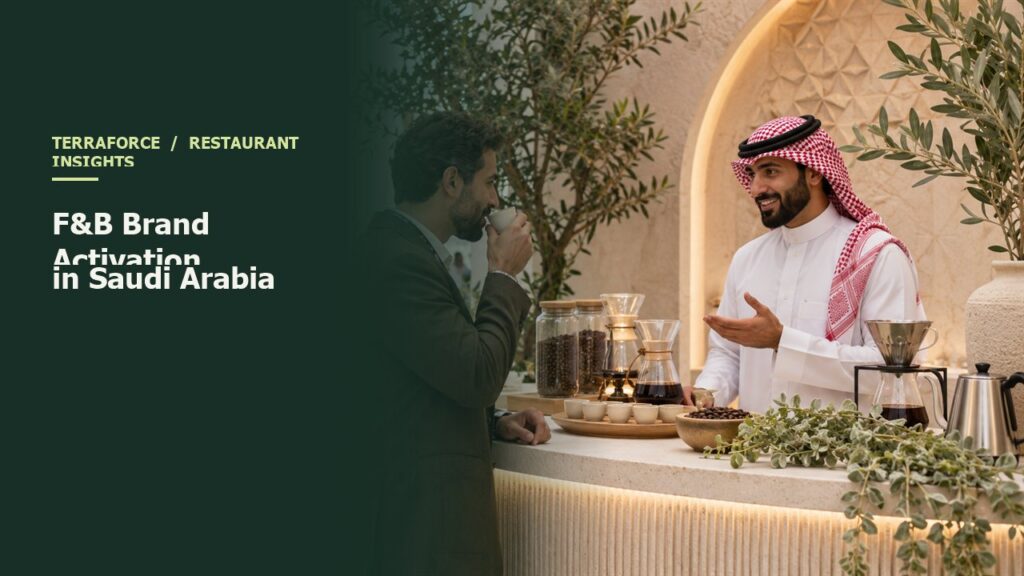
A food and beverage brand activation in Saudi Arabia is a live experience designed to move a relevant audience from curiosity to a specific action. A pop-up counter can help people taste a new product, visit a branch or make a qualified business enquiry. Define the audience, venue, guest journey and method of measurement before ordering a booth or booking creators. TerraForce Marketing connects campaign strategy and creative production with partnerships, activations and the work that follows the event.
Picture a specialty coffee brand at a neighbourhood event in Riyadh. A crowd watches a demonstration and many guests accept a sample. The host knows the coffee but sends everyone to a general social profile. The operator finishes the day with videos and a sample count, while guests have no easy route to find the featured drink at the nearby café. The event might still build awareness, but its capacity to drive a visit will be hard to judge. A defined journey lets the team sell the right experience and collect evidence about what happened.
- Choose a measurable action.
- Rehearse the venue and guest journey.
- Connect product trial with follow-up.
Explore this guide
Pick a result your team can influence
Decide why the audience should meet the brand in person. A tasting can help introduce a menu item where flavour is the barrier. A temporary retail counter can validate whether buyers will pay for a product in a location the brand does not yet serve. A catering partnership can give venue managers a reason to discuss their next event. Give each activation one primary goal, an appropriate action and an owner. Write what you will count before debating the backdrop or apron colours.
Distinguish outputs from outcomes. Samples served and clips produced tell you what the activation did. Matched branch redemptions, purchases at the stand, eligible enquiries or useful product feedback tell you more about the commercial or research goal. If the aim is to understand preference, collect responses in a way that represents the target audience reasonably well. If the aim is first purchase, make it clear how to buy and where the product is available after the exhibition closes.
Find a venue that fits the audience and offer
Compare venues on the people who use them, the likely journey near the stand and what the team can do in the allocated footprint. A busy concourse can be a poor place for an explanation that takes four minutes. A smaller event with the right hospitality buyers can be more useful for a catering discussion. Visit at a time that resembles your planned shift. Observe where visitors slow down, where lines form, how people approach and whether they have a reason to stay.
Ask for the venue information required by your operations and event teams. Confirm permitted activities, setup access, storage, utilities, waste handling, insurance and the approval process for distributing food or drinks. Allocate responsibility for checking any applicable permissions against your activity with the organizer and relevant professionals. A partnership can supply the space and introduce an audience; write down which team owns staffing, recruitment, creative, product, data and post-event follow-up.
Draw the guest journey before designing the stand
Make the attraction easy to understand from a distance. Place the menu, timings and invitation where someone can see them before joining the line. Design entry, sampling, questions and exit as a sequence, with a plan for people who choose to buy or scan. A customer who wants to ask about ingredients should be able to reach a trained person without stopping every transaction. Provide appropriate accessible routes and an alternative for people who cannot use a QR code.
The physical design belongs to the brand experience. Use consistent signage, hero packaging and photography, and make the Arabic and English copy easy to read in context. Visit the TerraForce Marketing Portfolio for examples of identity, packaging and styling across touchpoints. Use the restaurant photography guide when writing the shoot brief. For a new product, check that imagery shows what visitors will actually receive, especially if the tasting size or available toppings differ from the branch offer.
Plan throughput with a real rehearsal
Time the complete action for a typical visitor, including waiting, a handoff and questions. In a hypothetical plan, one host can complete a sampling interaction in 75 seconds. Continuous work at that pace is 48 interactions an hour. If the schedule reserves one quarter of the hour for restocking and resets, the starting estimate falls to 36. Rehearse with realistic groups before calling that a capacity figure. Separate sampling and payment if the purchase step would slow everyone down.
Assign one person authority to simplify the experience when capacity is reached. They can shorten the explanation, offer a later slot, pause sampling or bring in an approved second station where the footprint allows it. Give staff a plan for a lost supply, malfunction, guest concern or unavailable language support. Check the food handling and venue procedures with the responsible team. Use the TerraForce pre-opening and training service if the activation also tests a menu or customer handoff before a restaurant launch.
Choose one follow-up path that works on a phone
A scan should lead to the specific offer shown at the stand. If the goal is to drive a return visit, provide the branch, eligibility details, availability and redemption steps. If the goal is a catering enquiry, provide a short form and ask only for information required to follow it up. Avoid forcing everyone through the same discount funnel. Provide a visible short URL or a staff-assisted option for a guest who does not scan. Test the page after the final QR has been printed and under the connectivity conditions the audience will face.
Decide how consent and permissions will be handled before collecting contacts or filming identifiable people. Ask the responsible team to confirm the script and the form, including who can access responses and how they are used. Make sure there is a workable route for serving people who choose not to provide their data. For partnerships, agree which team will own and respond to enquiries. An enquiry is less valuable when it waits until the partners have settled who should answer it.
Plan for on-site content and the week after
Write the essential shot list first: the venue context, the brand in use, the offer, one wide view of the setup and meaningful visitor interactions where filming is approved. Agree the crew position with operations. A photographer should not block the public line or direct the service team into a pose while guests wait. Capture bilingual captions and usage details as part of production, and keep an approved set of branch-focused graphics ready for when the event ends.
Take the event further with a specific second action. People who discover the product through social coverage should be able to find it even though they were not present. A branch manager should know which code was advertised and the last day it applies. If the live experience is tied to an iftar, seasonal menu or suhoor launch, use the companion Ramadan restaurant marketing guide to keep capacity, content and booking availability aligned. The restaurant influencer marketing guide can help you brief invited creators around the event objective and audience.
Budget for what happens after the first visitor arrives
Include creative development, venue, fabrication, staffing, transport, signage, product, technology, documentation and follow-up. Record what the venue and partners will provide in writing. Clarify whether quoted totals include installation, rehearsals and removal. When estimating cost per usable result, include production and staff costs tied to the activation. Track normal business costs only when they are attributable and apply the same method when comparing different venues.
An illustrative activation costs SAR 12,000 all in. It serves 600 samples and has 240 valid visits to its dedicated page. The café records 48 matching redemptions. That is SAR 20 per sample, SAR 50 per visit and SAR 250 per matched redemption, each answering a different question. A redemption might also include repeat guests who would have come anyway. For profit decisions, compare actual incremental contribution and the evidence behind it, and avoid treating all recorded visits as new business.
Run a pilot and decide what to change
Start with a manageable pilot at a location that resembles the intended rollout. Collect counts by session and note when the booth, queue or follow-up process changes. Conduct a short debrief with the hosts and floor manager. Ask where people hesitated, whether they understood the brand and what happened when the stand got busy. Review the digital trail and compare it with the record of visits or orders. Change one major variable at the next event so you can judge whether it improved the process.
Build a short review that a brand manager can act on. Include the original objective, who attended, what the team delivered, verified outcomes, costs, bottlenecks and the next decision. Note limitations such as delayed redemptions or shared codes. Reuse the approved visual assets where they fit, and revise the staffing ratio or guest promise before scaling to several venues. A successful small activation teaches the operator how to repeat it with a clearer brief and fewer avoidable handoffs.
Prepare a one-page event run sheet
Give the floor lead a written record of the setup window, queue limits, escalation contacts, the current version of the offer and how to stop or restart the station. Ask a staff member to use the sheet during rehearsal rather than relying on its author to talk through each step. Record where they hesitate and correct those instructions before the event.
Work with TerraForce on your brand activation
Discuss your activation with TerraForce and bring the product, city, intended audience, budget range, date options, venues under consideration and the action you want guests to take. If you have a defined brand system, share the approved assets and examples. If you need positioning and a launch idea first, the team can help connect the offer and concept with creative direction, campaign assets, partners and measurement.
A useful first deliverable can be a short activation brief covering the guest journey, physical footprint, staffing roles, approval responsibilities, production scope and result to review. That gives your creative and operations teams one plan to test before they commit to a full campaign.
Frequently asked questions
Does an activation need a custom booth?
The right setup depends on the venue, product and objective. A well-presented counter can be enough for a short tasting and a clear next step. A more complex structure earns its place when it serves the experience or solves a documented operational need.
How should a brand choose between a mall, café and private event?
Match the location to the audience and the time the experience requires. Compare venue rules, sample throughput, the next action and operational access. Visit at the intended time of day before deciding how much of the budget to allocate.
Which metric should we use?
Tie the primary measure to the purpose. Product testing might need usable feedback from the intended audience. A visit campaign might need matched branch redemptions and a fair estimate of who would have visited anyway. Report samples and scans as supporting steps.