
Ramadan Restaurant Marketing in Saudi Arabia
Plan Ramadan restaurant marketing with TerraForce. Shape an iftar or suhoor offer, produce bilingual content and measure confirmed bookings.
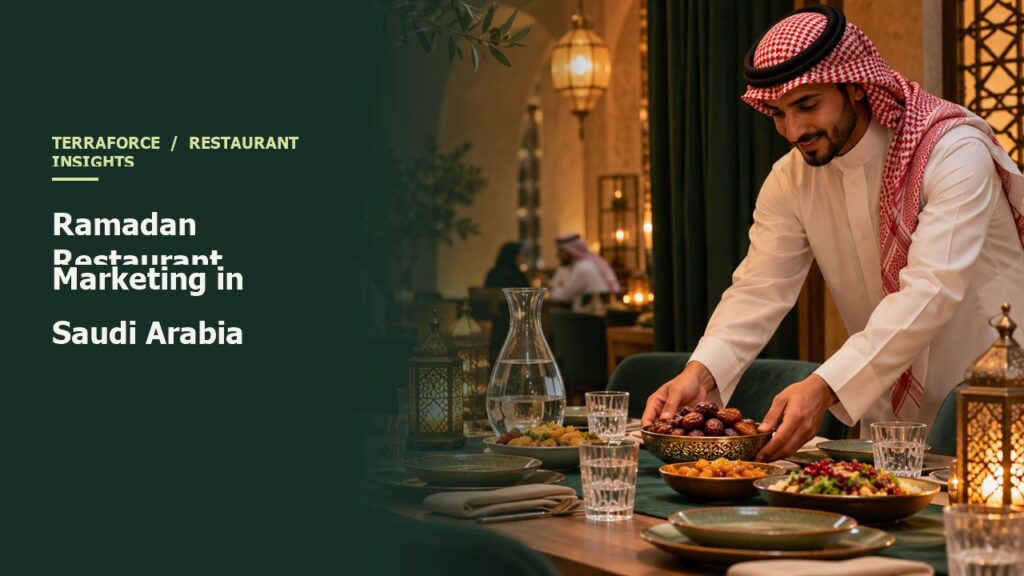
A Ramadan restaurant marketing campaign in Saudi Arabia starts with a bookable offer for a specific occasion. Decide whether you are filling iftar tables, growing suhoor visits, or securing catering enquiries. Give the offer an accurate bilingual page, plan production around service demand, and use confirmed bookings or qualified enquiries to judge performance. TerraForce brings these pieces together through marketing and communications, from campaign strategy and creative production to paid media and measurement.
The design and content need to feel right for Ramadan, but the decision to book usually depends on practical questions. What is included? Which branch is taking reservations? What time should guests arrive? Can a family book a different seating? Does a corporate host need to request an invoice or review a group menu? When the booking team and the campaign answer these questions consistently, the customer can move from interest to a decision without a round of messages.
- Choose the occasion and set booking capacity.
- Make the offer easy to find and confirm.
- Measure bookings and attendance.
Explore this guide
Choose the occasion before writing the offer
Treat iftar, suhoor and corporate catering as different decisions. Someone booking iftar may care about seating time, location, price, prayer arrangements and accessibility. A group choosing suhoor may want to know how late the kitchen operates and whether they can order individually. A catering decision may involve headcount, setup, delivery, venue access and the date a proposal is needed. Use one shared brand direction and write an offer around the questions for each occasion.
Select a primary commercial objective for each branch that participates. An outlet with strong organic weekend demand might want to fill weekday tables. A hotel restaurant may need more enquiries from event planners with specific group sizes. A café might want guests to return after iftar for a seasonal drink. Each objective implies a different message, channel and call to action. If the campaign owner cannot explain who the offer is for and what action they want, settle those points before booking production.
Give the campaign an operating ceiling
Ask the venue team what it can deliver within the service promise. Consider kitchen throughput, seating, the size of the party, the pace of table resets and how arrivals are distributed. A room with 100 seats cannot necessarily accept 100 arrivals in one moment. For delivery and catering, identify realistic order cutoffs and service zones. Record who can pause an offer when space runs out or switch the campaign to the next available day.
For example, a restaurant has 80 available seats in a trial service window and decides to reserve 16 for walk-ins and changes. The online cap for that trial would be 64 seats. If a block of 12 is reserved manually, 52 are left online, assuming the booking tools and host use a shared count. These are hypothetical figures. The operational point is to subtract from one capacity record, not let the booking form, phone and messaging team each promise the full amount.
Build a page that lets people make a decision
Put the offer name, branch, dates, inclusions and booking route on a dedicated bilingual page. Say what happens after the guest taps the main button. A guest asking via WhatsApp may be submitting a request that needs confirmation. If the site can reserve instantly, explain where the confirmation appears. Present the price and applicable terms clearly, with a separate route for groups when the details differ. Test small screens and the right-to-left version using an actual booking journey.
Follow the same structure when advertising several branches. Route each ad to a page or section that reflects the name and location shown in the creative. Include a link to the regular menu when useful, and put the exact reservation or enquiry action close to the seasonal offer. The TerraForce Marketing Portfolio shows how brand direction can connect visual identity, social assets and customer-facing details. Use the same principle for the booking page, campaign assets and in-venue communication.
Use search to answer practical Ramadan questions
Build the editorial and advertising brief from real questions. Look at your booking messages and previous seasons' search data if available. Pay attention to wording around a city, district, date, group size and type of dining. One person searches for a Ramadan buffet in Riyadh, another for an iftar for a company team, and another simply wants your brand's menu. Organize the page so it answers the questions supported by the real offer, using language a guest would use.
Keep the evergreen campaign page useful outside the season with a visible status update and an archived or updated menu where appropriate. Update dates and prices before promoting the next edition. Give reusable material a stable home, and trim out expired instructions that could mislead a reader. For initial searches tied to your branches, review the restaurant local SEO guide and make sure the visible branch information agrees with the campaign landing page.
Plan the content shoot around the decision to book
Photograph what the guest will receive. Capture the setting, hero dishes, format, table scale and a realistic serving sequence. Make an explicit distinction in production between a photo for mood and a photo used to describe a package or item. If you use styling that exaggerates what comes with the reservation, people can arrive with different expectations from the floor team. Agree terminology in Arabic and English and send the final food and offer details for sign-off before export.
Prepare frames for the website, stories, paid placements and venue screens from the same shoot. Choose a few clips that show function, such as what group seating looks like or how a tasting portion is served. Build a small caption library for pricing, accessibility and booking. TerraForce's restaurant photography guide can help you prepare the brief, rights and shot list. Plan creator content around the visit they can actually show and check the booking action after each piece goes live.
Allocate spend around demand and availability
Start with a conservative test and identify which users already intend to book. Search campaigns can match concrete city and occasion terms. Social creative can introduce the offer and explain what makes the dining experience appropriate for the audience. Share availability updates from the restaurant and use them to change where or when the team sends traffic. A branch that is full on Thursday has a reason to move spending to a weekday or to stop the affected ads until booking inventory changes.
Use separate reporting labels for each branch and offer. Test one meaningful variable at a time, such as an iftar family visual versus a close-up of the advertised menu. Keep the promise, dates and availability the same while comparing. Where advertising platforms offer optimisation events, check whether they correspond to a meaningful booking action. A chat open or landing-page visit can help diagnose the path but cannot count as a reservation. The restaurant Google Ads guide explains the relationship between local targeting, landing pages and conversion checks.
Keep the message current during live service
Appoint one person to verify changes to availability, menu offers or pickup times. Give the team a short checklist covering the paid ad destination, booking page, Google profile, social highlights, in-store signage and front-desk script. Decide how fast each outlet can confirm messages during its opening hours and explain what happens when it receives a request outside that period. Log and check a real mobile enquiry as a guest would, including the handoff to the booking team.
Brief staff on how to handle sold-out dates. Offer another seating or branch only if the team can confirm the alternative. Set an escalation route for pricing disputes or accessibility queries. If creator coverage or a tasting event is part of the programme, link the invitation to the same live booking destination. The companion F&B brand activation guide shows how an on-site trial can lead to a measurable action while keeping the queue and service promise manageable.
Measure bookings and commercial outcomes
Suppose an illustrative campaign spends SAR 3,600 and sees 90 bookings linked to paid traffic. Of those, 75 are confirmed and 60 parties show up. Paid media cost is SAR 48 per confirmed booking and SAR 60 per attending party. If the campaign also has production and staffing costs, keep them visible when judging contribution. Compare like with like by recording the branch, occasion and seating window. A party is different from a cover, and a request to book is different from a party that attends.
Review attribution with care. A returning guest could see a paid ad and book by phone. A CRM record can identify the booking source the guest reports without showing every touchpoint that influenced it. Compare website and booking records, count each reservation once, and agree how to handle cancellations, group bookings and walk-ins. If your data is limited, document that before making budget decisions. A consistent small measurement set is more useful than several reports built on incompatible definitions.
Build a production calendar that teams can use
During preparation, agree the brief and capacity, produce the landing page and schedule the photo and video. Test all channels with the reservation or enquiries team before the announcement. Once the campaign is live, review availability and enquiry quality frequently enough to catch a misleading message or a broken form. During service, track which issues guests mention when they arrive. Use those comments to improve the wording and branch handoff while correcting operational issues with the people who own them.
After Ramadan, compare what happened with the specific objective for that branch. Save the usable imagery, booking questions, approved bilingual copy, advertising notes and any unresolved issues. Note what to reproduce and what to test in the next edition. A café can keep a stronger after-iftar offer or select a different service window based on what it learned. A group with inconsistent reports can use the quiet period to clarify how each branch confirms bookings.
Work with TerraForce on the full guest journey
TerraForce can start with offer and positioning work, a bilingual content brief, or a coordinated campaign that includes production, launch and measurement. For a first conversation, bring the branch locations, type of service, draft offer, estimated capacity, booking method, launch window and available assets. If it is a repeat campaign, share last season's booking counts, event calendar and practical issues the venue team encountered. That gives the marketing team enough context to make a useful first proposal.
Discuss your Ramadan campaign with TerraForce if you want to define the offer, prepare the assets and agree what to measure. The team can work with your restaurant or hospitality group to make the content, booking path and in-venue experience support the same promise.
Frequently asked questions
When should a Ramadan campaign start?
Plan backwards from when customers need to decide and from the time your venue needs to approve the offer, produce creative and test bookings. Group and catering decisions can need a different lead time from a café visit. Use confirmed dates and update any material that relies on seasonal timing.
Should we advertise if we are nearly booked?
Check available seats, remaining dates and staff capacity first. You can direct demand to a different seating, location or offer if the booking team can actually accept it. Use available inventory as the basis for decisions about where to keep advertising.
What should the main measurement be?
Choose a result linked to the offer, such as confirmed bookings and attendance for a dining campaign or qualified leads and signed projects for a catering campaign. Report supporting views and clicks alongside those outcomes so managers can see where the journey needs improvement.