
Catering Marketing in Saudi Arabia
Plan catering marketing with TerraForce. Position your offer, design a bilingual enquiry journey and track qualified leads, quotes and bookings.
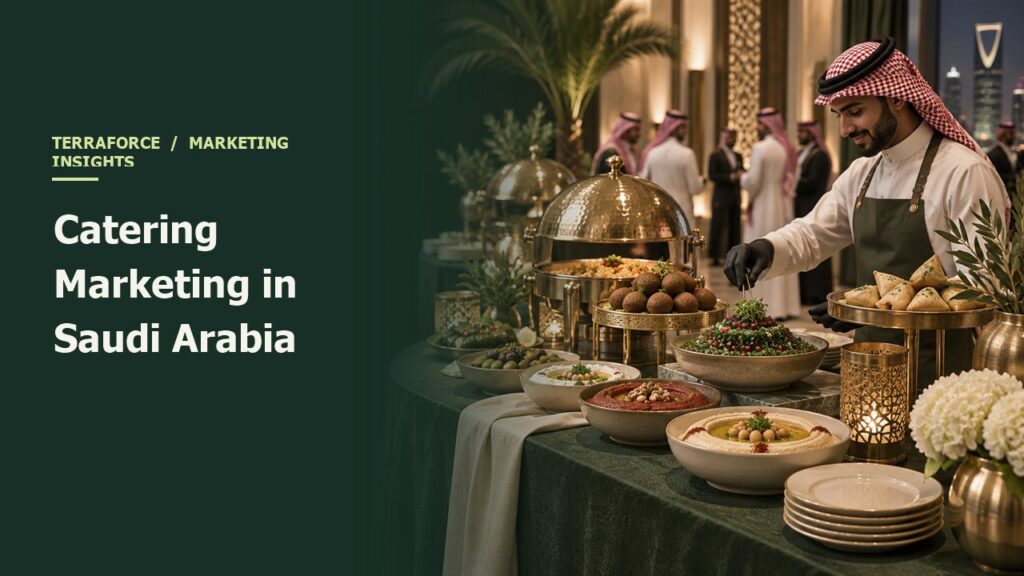
Catering marketing in Saudi Arabia helps an event organiser decide whether a provider can serve the occasion before they spend time requesting a quote. An office manager organising recurring lunches, an agency producing a product launch and a family planning a private celebration need different evidence. All may like the same food photograph, but they will ask different questions about delivery, service, setup, guest numbers and who will handle changes.
TerraForce combines positioning, identity, creative production and campaign execution through its marketing and communications services. The TerraForce Marketing Portfolio includes Catering d’or, with naming, visual identity and packaging applications. This guide is for catering businesses and restaurants with an events arm. It explains how to present a service accurately, create a useful path to a quotation and measure what happens between an enquiry and a confirmed booking.
- Build an offer around one event segment you can serve.
- Connect service evidence to a clear enquiry path.
- Track qualified enquiries, quotes and confirmed bookings.
Explore this guide
Choose an event segment you can serve consistently
Start with a comparison of the work you already do well. List each recurring event type, typical guest count, service area, preparation lead time, equipment, staff requirements and what causes delays. A catering company may be ready to handle office meals or private dinners, yet need a different staffing and transport model for a staffed buffet at a large venue. Separate those requirements before giving them equal space in a campaign.
For each segment, describe the person making the decision and the information they need. An office manager may value predictable delivery, invoicing and repeat ordering. An event agency may need to know how the catering team coordinates arrival and setup with the venue. A private client may care about dietary requests, presentation and what is included. Write one offer around the segment you can support today, and leave room to expand as your team develops other capabilities.
Turn your operations into a clear offer
Start with a sentence that connects the occasion, the service and the territory. For example, a team might offer weekday office lunches with set delivery windows in selected parts of Riyadh. Another team might provide staffed receptions with a separate planning call. Specify the deliverables that are actually part of the offer. A potential customer should be able to distinguish food delivery from an attended service, and see whether setup, equipment, staffing and collection require a separate discussion.
Keep capacity and availability conditional when they depend on dates and venue details. Provide a clear next step for enquiries outside the stated area or guest count. Avoid publishing a broad promise that staff then need to reverse on the phone. The concept and brand innovation service can help clarify the audience and value proposition. If an established catering offer has changed enough to confuse buyers, the restaurant rebranding guide explains how to retain familiar cues while updating the way the service is presented.
Build pages around occasions and evidence
Give a priority service its own page when you have enough distinct information to support it. For a corporate catering page, explain who the service suits, where you operate, which formats you offer, how far ahead to enquire and which details you need to prepare a proposal. For private events, explain the options relevant to that audience. A single service page may be appropriate for a focused operation. Expand only when each new page answers a distinct buyer question.
Show practical evidence beside the offer. Use permission-cleared event images, accurate examples of layouts or menus and an explanation of your planning process. Label sample setups and menus clearly if they are illustrative. If a project is public and you have approval, show what the catering team actually delivered and describe the event context. Avoid implying that an image of an elaborate setup guarantees the same equipment or capacity for every job. Make the next step visible before and after the proof.
Give the menu and photography specific roles
An event menu should explain the service format and selection, with enough context for the organiser to compare options. State which details depend on the event brief, and keep descriptions and dietary information aligned with the kitchen’s approved records. The companion restaurant menu design guide shows how to structure menu information for Arabic, English, print and phones. For catering, add a clear route from the sample menu to a quotation, with the service type and intended occasion already visible.
Plan photography to show scale and logistics as well as food. Include a wide frame for the overall setup, a close-up of presentation, and an image or clip that helps explain service. A corporate buyer may want to see individual delivery packs, while a venue planner may want to understand the footprint and flow of a staffed station. Agree the intended channels before shooting so the team captures crops for landing pages, proposals and social assets. See TerraForce’s restaurant photography guide for a production brief.
Ask for the minimum information needed to prepare a quote
Build the enquiry around what the sales team uses at the first review. Typical fields include date or timeframe, city or venue area, estimated number of guests, type of occasion, preferred service format and a suitable contact route. Give people an option when the guest count or venue is still provisional. Use labels and short examples if a field is easily misunderstood. Keep sensitive or unnecessary details out of the initial form and let the team request additional information at the appropriate stage.
Set expectations after submission. State when someone will respond and whether the enquiry is subject to checking availability. Route corporate and private requests to the appropriate person. If an enquiry starts through messaging, use a short response template with the same first questions and record it consistently. For website structure and mobile testing, see the restaurant website design guide. Ask a colleague to complete the journey from a campaign link to the confirmation page before putting money behind it.
Match the marketing channel to the buying stage
Search can reach a buyer who is already looking for corporate lunches or an event caterer in a specific city. Use landing pages that answer that request and make the service area clear. Social content can show how the experience feels, how food arrives and what a setup looks like. A sales deck and relevant email follow-up can help an organiser compare a proposal internally. Connect the channels so a person who first sees a short video can reach the same accurate details later.
Prioritise channels you can serve and measure. For a short paid test, choose a real audience and destination and decide how you will recognise a relevant enquiry. Read our paid social ads guide for restaurants for the connection between the ad, its destination and the verified result. For a business with established local search demand, the Google Ads guide for restaurants provides a way to think about campaign scope and measurement. Adapt both guides to an enquiry and quotation process rather than a direct food order.
Localise the Arabic and English buying journey
Write Arabic and English pages around the same practical offer. The language should sound natural for a buyer in each version, with consistent place names, contact details, availability and service terms. Review event categories with the sales team to ensure prospects and staff use the same words. For example, a guest may understand boxed lunches, meeting hospitality and full event catering as separate services, while an internal team uses a single label for all of them.
Test the whole flow in both languages, including date entry, phone layout, field labels and confirmation messages. Check that a visitor can change language without losing the intended service page. Agree which team members will respond in each language and how they will record outcomes. A polished landing page will do little for enquiries if the follow-up asks the client to restate information or sends an unrelated proposal. The language plan should include proposals and repeat communication as well as public copy.
Measure enquiries, qualified opportunities and confirmed work
Agree definitions before comparing channels. An enquiry may be any valid message or form submission. A qualified enquiry might meet agreed conditions for city, guest range, date, service and budget. A quote is a proposal delivered to the client. A booking is confirmed only when the business’s actual confirmation process is complete. Use a single record to connect these stages so that repeat messages and follow-ups do not inflate the number of opportunities.
Track source where feasible, qualification reason, quote date, booking outcome and response time. Review patterns weekly. Many enquiries outside the service area may suggest that the campaign promise or geographic targeting needs work. A good qualification rate with few quotes may point to a slow handoff or incomplete forms. Many quotes and few bookings could reflect fit, proposal clarity or capacity. Discuss the evidence with both sales and operations before changing the spend.
Use a simple commercial review before scaling
Suppose an illustrative pilot spends SAR 1,800 on media and receives 24 distinct enquiries. Twelve meet the business’s qualification criteria, six receive quotes and three become confirmed bookings. Cost per enquiry is SAR 75 and cost per qualified enquiry is SAR 150. The media cost per confirmed booking is SAR 600 before production, management or other campaign costs. These fictional figures show why reporting all messages as equivalent would hide important differences.
To evaluate the test, compare the cost of acquisition with the actual contribution from confirmed work. Consider the expected food, staff, transport, equipment and supplier costs for the booked service and any price adjustments. Separate repeat business from work attributable to the campaign where you can. With only a few bookings, treat the data as an early reading. Document delays, holidays and overlapping campaigns before concluding that a channel consistently produces a particular result.
A fictional example: improve a weekday corporate offer
Imagine a catering team receiving frequent messages about office lunches. The sales team spends time asking for headcount and delivery area, and some requests are impossible to serve. The business builds a bilingual page for its weekday office format. It gives a clear description of the pack, shows realistic photos, states the service area, and asks for estimated quantities and preferred delivery time. It uses a separate route for staffed events that need more planning.
After the first test, staff record which enquiries were serviceable and why. They see repeated requests for a place outside the stated area. The team makes the coverage message more visible and checks the location settings before adjusting spend. It also writes a short response for requests beyond capacity. The example is fictional. It shows how good marketing connects a clearer promise with practical changes in the sales process.
Brief TerraForce on the service and the next business decision
Share the occasions you serve, the geographic footprint, current enquiry sources, sample proposals, approved images and the practical constraints you want buyers to understand. Identify which event type should lead and which action you can reliably track. Agree the project scope around positioning, identity, content, landing pages, campaigns and reporting. Include the people responsible for answering enquiries and confirming availability when the brief is reviewed.
View selected work in the TerraForce Marketing Portfolio to see how branding, packaging and content can support the way a catering business presents itself. Contact TerraForce with one event segment you want to grow and an example of the enquiry you would like to receive. That gives the team a concrete basis for discussing the next step.
Questions about catering marketing
Should a catering website publish prices?
Use a starting price or sample package only when the underlying assumptions are clear and the team can honour them. For variable jobs, explain the factors that affect the quote and what information the organiser needs to provide.
Can we use WhatsApp for all enquiries?
Messaging can work when someone owns response times and qualification. Keep a consistent record of enquiry details and outcomes, and offer an alternative contact route for people who need to share a more detailed brief.
What should the first campaign promote?
Promote one service with clear coverage, availability, approved visuals and a working enquiry route. Choose a segment where the team can reliably respond and follow the outcome through to quote and booking.